Musical Crib Mobile with Animal Rattles & Soft Projection
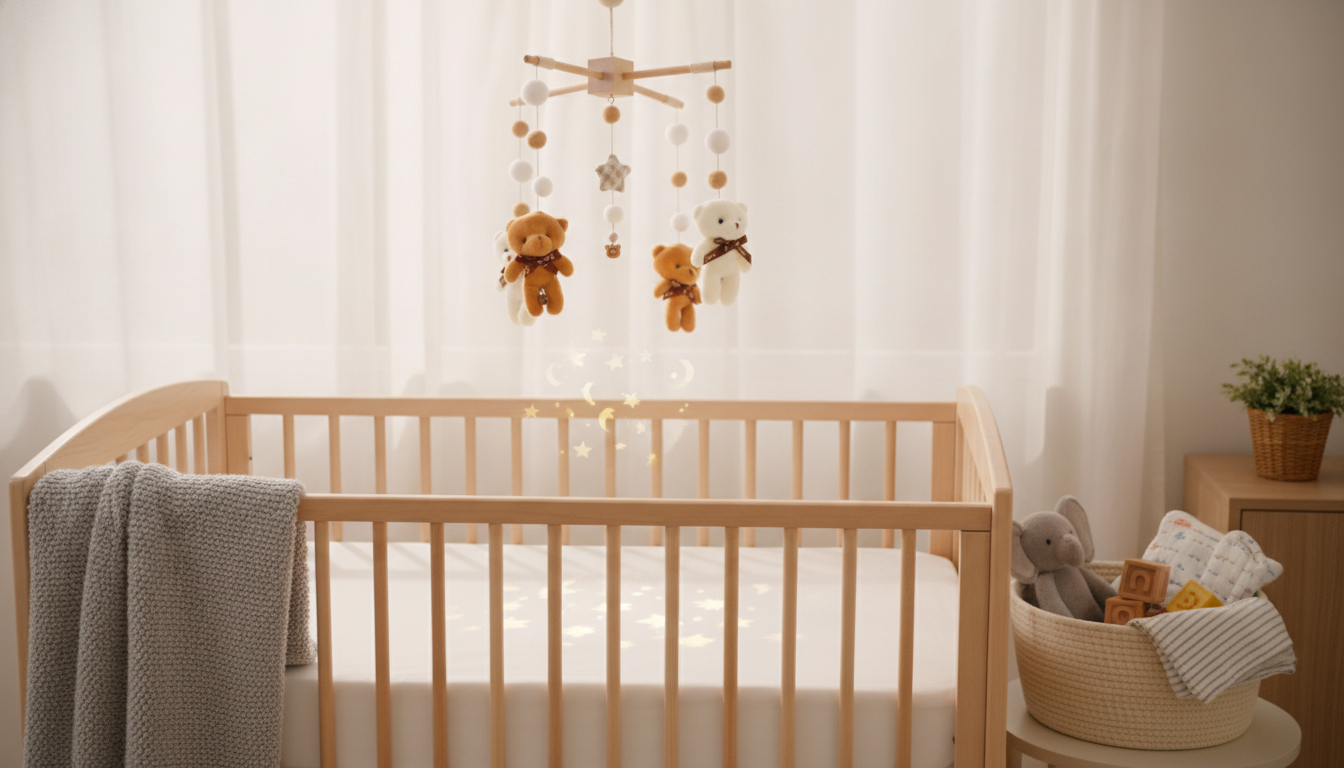
Musical Baby Crib Mobile with Animal Rattles & Projection: Calming Sounds, Gentle Motion, and Bedtime Light
A crib mobile can do more than decorate the nursery—soft music, slow movement, and a soothing projection can help build a consistent wind-down routine for babies while offering age-appropriate sensory stimulation. This guide breaks down what to look for, how to use a musical mobile safely, and how to get the most out of animal rattles and projection features at bedtime and during quiet play.
What a Musical Mobile Adds to a Baby’s Routine
When used thoughtfully, a musical crib mobile can become a steady “time to settle” signal while also supporting brief, supervised quiet moments in the crib.
- Creates a predictable pre-sleep cue when used the same way each night (music → lights/projection → off).
- Supports calm, supervised quiet time in the crib during the day with gentle motion and soft sound.
- Encourages visual tracking as babies follow moving shapes, which can support early focus skills.
- Adds a comforting ambient element for caregivers during nighttime soothing and feeds.
For safe sleep basics and how the sleep environment should be set up, follow guidance from authoritative sources like the American Academy of Pediatrics (AAP) Safe Sleep recommendations.
Key Features: Music, Animal Rattles, and Projection
Not all mobiles are built the same. The most nursery-friendly options focus on calm, consistent sensory input rather than bright, high-energy stimulation.
- Music and sound: look for multiple melodies or soothing sound options and volume control for different times of day.
- Animal rattles: lightweight hanging toys can add texture and gentle sound when tapped during supervised play; ensure attachments are secure and sized appropriately.
- Projection: a soft ceiling or wall projection can act as a low-stimulation nightlight alternative; brightness should be gentle rather than vivid.
- Motion: steady, slow rotation is typically more calming than fast movement; avoid anything that swings widely.
- Controls: simple buttons or remote-style control (if included) can make nighttime adjustments quieter and faster.
Feature checklist for a crib mobile with projection
| Feature | Why it matters | What to check |
|---|---|---|
| Volume control | Helps keep sound at a soothing level | Low minimum volume; no sudden loud startup |
| Multiple melodies/sounds | Prevents repetition fatigue for caregivers | Several options; smooth transitions |
| Gentle projection | Creates a calming visual cue | Soft brightness; steady pattern; easy on/off |
| Secure hanging rattles | Reduces risk of detachment during use | Tight fasteners; reinforced loops; no sharp edges |
| Stable crib mount | Keeps the mobile from shifting or tipping | Firm clamp; compatible with crib rail thickness |
| Easy cleaning | Supports hygiene in the nursery | Wipeable surfaces; removable soft parts if applicable |
Using It Safely in a Crib
Mobiles are meant to be calming, but safety is the top priority—especially as babies grow quickly and reach new milestones.
- Follow the manufacturer’s age and weight guidance; many mobiles are intended for early months and should be removed once a baby can push up, sit, or pull to stand (depending on product instructions).
- Keep cords and straps out of reach; avoid any dangling elements that could become accessible as the baby grows.
- Position the mobile so the lowest hanging parts remain well above the baby’s reach while lying down.
- Confirm the mount is tightened securely before each use—especially after moving the crib or changing bedding.
- Use only as intended: a crib mobile is not a teether and should not be placed inside the sleep area as a loose item.
- For projection use at night, keep brightness low and avoid flashing patterns to reduce overstimulation.
For broader crib and nursery product safety information, review the CPSC nursery product safety information.
Setup and Placement Tips for Best Results
Small placement adjustments can improve the projection view, keep sound comfortable, and make nightly use easier for caregivers.
If you’re balancing sleep routines with daytime development, the “back to sleep, tummy to play” concept remains a helpful reminder; see the CDC’s guidance on sleep hygiene for practical environment and routine ideas.
How to Build a Calmer Bedtime with Music and Projection
Care, Cleaning, and Battery/Power Considerations
A Nursery-Friendly Pick: Musical Baby Crib Mobile with Animal Rattles & Projection
If you’re looking for one accessory that can support a wind-down routine with sound, gentle motion, and a soft visual cue, Musical Baby Crib Mobile with Animal Rattles & Projection is designed to combine soothing music, hanging animal rattles, and a projection feature for bedtime and quiet-time use.
To round out a cozy, kid-friendly space beyond the crib, consider a gentle decor accent like the Resin Reading Rabbit Figurine for Kids’ Room Decor—a simple way to add warmth to shelves, dressers, or book corners without adding anything to the sleep area.
FAQ
When should a crib mobile be removed?
Follow the product’s instructions, but many mobiles are removed once a baby can push up, sit, or pull to stand, or anytime any part becomes reachable. As skills change quickly, re-check height and reach often and prioritize safety over routine.
Is projection at bedtime too stimulating for babies?
It depends on brightness and movement: a dim, steady projection can be calming, while vivid or flashing patterns may be overstimulating. Use the lowest comfortable brightness for a short window, then turn it off as baby gets drowsy.
How long should music from a crib mobile play?
A short, consistent routine often works best—commonly around 5–15 minutes—then reduce stimulation by switching to music-only or turning it off. Avoid loud volume or nonstop playback all night unless the product guidance specifically supports it.















Leave a comment