75% Wireless Hot‑Swap RGB Keyboard for Mac & Windows
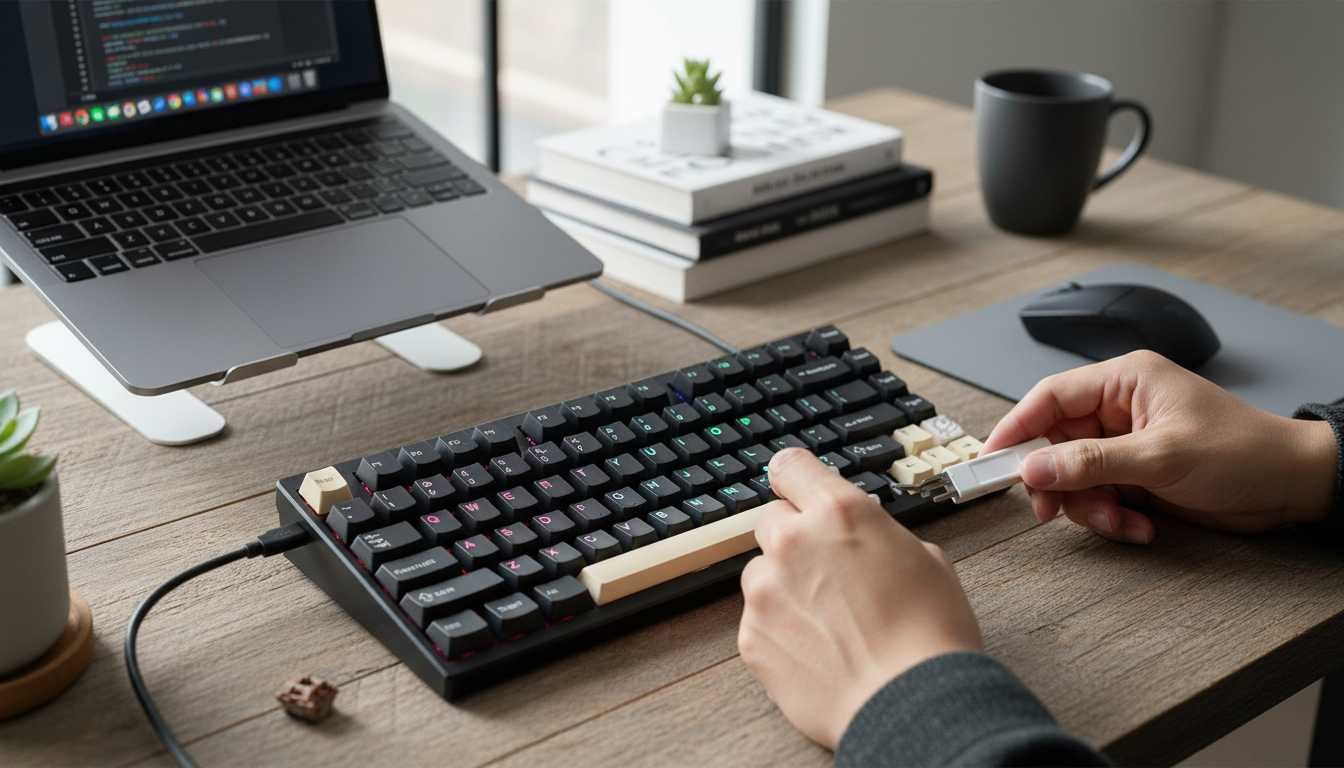
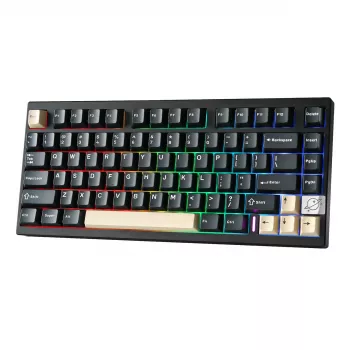
75% Wireless Mechanical Gaming Keyboard with Hot Swap and RGB Backlighting for Mac/Win
A compact 75% layout keeps the keys most people rely on every day—function row, arrows, and navigation—while shrinking the footprint enough to make a desk feel instantly cleaner. Combine that space-saving design with wireless freedom, hot-swappable mechanical switches, and vivid RGB backlighting, and you get a keyboard that fits gaming nights, focused work blocks, and mixed Mac/Windows households without turning your setup into a cable jungle.
What a 75% Layout Changes Day to Day
A 75% keyboard is a practical middle ground: smaller than a full-size board, but more complete than many ultra-compact layouts.
- Keeps the function row and a navigation cluster in a tighter footprint than a full-size keyboard, reducing mouse reach and freeing desk space.
- Balances gaming and productivity—writing, spreadsheets, and shortcuts—without forcing a separate numpad workflow for most users.
- Works especially well for smaller desks, shared workstations, and minimalist battlestations where cable management and clean lines matter.
If you routinely enter long columns of numbers, consider pairing a 75% board with a separate numpad. For everything else—general office work, browsing, coding, and gaming—the layout tends to feel “complete” after a short adjustment period.
Wireless Performance and Connection Options
Wireless isn’t only about aesthetics. It’s about flexibility: docking a laptop, moving between rooms, and swapping between devices without rearranging your entire setup.
- Wireless convenience supports cleaner cable routing, easier laptop docking, and quick moves between rooms or devices.
- For gaming, stability matters as much as speed—busy wireless environments (routers, Bluetooth headsets, controllers) can add interference.
- Real-world use: couch gaming with a PC, jumping between a desktop and a MacBook, or pairing with a work laptop during the day.
Wireless checklist for a smoother setup
| What to confirm | Why it matters | Quick tip |
|---|---|---|
| Connection type(s) available | Affects compatibility and response feel | Prefer a dedicated dongle for competitive play when available; Bluetooth is great for portability |
| Multi-device switching | Moves between Mac/Win devices without re-pairing | Label devices (Work/Gaming) and keep a consistent port/dongle location |
| Battery and charging behavior | Determines downtime and travel readiness | Use a timed lighting sleep setting to extend runtime |
| Wired fallback option | Ensures uninterrupted sessions | Keep a USB cable at the desk for instant plug-in |
For technical background on wireless standards and device behavior, the Bluetooth Core Specification and the USB HID device class documentation are helpful references when comparing connectivity and input device expectations.
Hot-Swappable Switches: Custom Feel Without Soldering
Hot swap is a quality-of-life feature that turns a mechanical keyboard into a modular tool. Instead of committing to one switch type for years, you can change the feel of individual keys—or the entire board—without soldering.
- Swap switches per key to tune sound and feel for different tasks (quiet typing on alphas, firmer modifiers, etc.).
- Common switch profiles: linear (smooth), tactile (noticeable bump), clicky (audible click).
- Great for experimenting: heavier switches for spacebar and modifiers, lighter switches for rapid actions, or tactile switches for typing-heavy work.
- Confirm compatibility before buying extras (commonly 3-pin vs. 5-pin support) and verify the socket type used by the keyboard.
When swapping, pull straight up to avoid bent pins, and don’t force a switch that doesn’t seat easily—alignment usually fixes it.
RGB Backlighting That’s Useful, Not Just Flashy
RGB can be practical when it’s treated like an interface instead of a light show. In dim rooms, it improves visibility; in games or shortcut-heavy apps, it can reinforce muscle memory with color cues.
- Use color zones (WASD, abilities, macros) for fast recognition during play or streaming.
- Look for adjustable brightness, multiple effects, and (when available) the ability to save lighting profiles to the keyboard.
- Practical presets: low-brightness static white for late-night typing, team-color themes for broadcasts, or per-key highlights for editing shortcuts.
- Battery impact is real—high brightness and animated effects typically reduce runtime, so a balanced preset keeps charging predictable.
Mac and Windows Compatibility That Actually Feels Native
“Compatible” should mean more than “it types letters.” A smooth cross-platform experience depends on modifier behavior and function-layer shortcuts.
For a quick refresher on macOS shortcuts and modifier expectations, Apple’s reference is a solid resource: Apple Support: Mac keyboard shortcuts.
Build, Comfort, and Sound: What Affects the Daily Experience
Setup and Care Tips for Long-Term Reliability
Product Snapshot and Who It Fits Best
Quick details
| Item | Detail |
|---|---|
| Product | 75% Wireless Mechanical Gaming Keyboard with Hot Swap and RGB Backlightingeb for Mac/Win |
| Price | 183.47 USD |
| Availability | In stock |
| Stock | 39 |
More in-stock picks for a complete setup
- Elegant Soft Leather Small Shoulder Bag for carrying compact gear to work, school, or a weekend trip.
- Marble Travertine Taper Candle Holder for Home Decor and Elegant Events to elevate a minimalist desk or shelf backdrop near your setup.
- Luxury Men’s Automatic Watch with Sapphire Glass & Stainless Steel Strap as a polished everyday accessory that pairs well with a refined workstation aesthetic.
FAQ
Does hot swap work with any mechanical switch?
Hot swap only works with switches that match the keyboard’s socket and pin format (commonly 3-pin or 5-pin). Before buying extra switches, confirm the board’s supported pin style so the switches fit and seat correctly.
Will it work on both Mac and Windows without remapping everything?
Many keyboards support OS modes or modifier swaps so Command/Option and Windows/Alt behave as expected. It’s still worth confirming how function-layer shortcuts, media keys, and screenshot controls operate on each OS.
How can RGB lighting be used without draining the battery quickly?
Lower brightness, use static or slow effects, and enable an idle sleep timer so lighting turns off automatically. For extra-long sessions, keep a USB cable nearby for easy plug-in while continuing to use the keyboard.









Leave a comment