250 ft Galvanized Steel Wire Rope: Setup, Cuts, Care
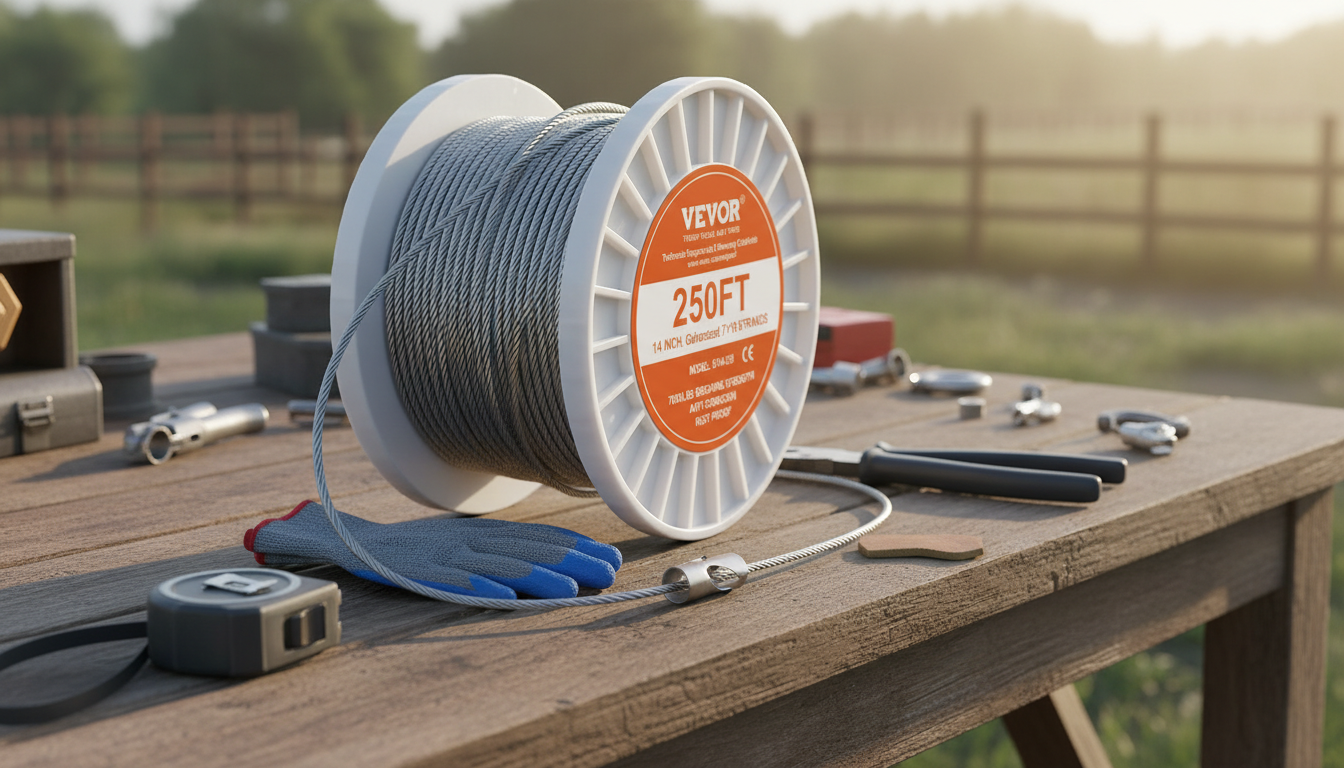
A long run of galvanized steel cable makes it easier to build secure, weather-tolerant setups without splices and weak links. This guide covers what this 250 ft wire rope is suited for, what to check before installation, and how to handle, cut, and maintain it for dependable performance in demanding environments.
If you’re planning a long, continuous run, start with the 250 ft Galvanized Steel Wire Cable Rope. For event setups where you’re also finishing the space, you may want a simple decor add-on like the Marble Travertine Taper Candle Holder for Home Decor and Elegant Events.
What This 250 ft Galvanized Steel Cable Is Used For
A 250 ft galvanized steel wire rope is most valuable when you need a consistent, uninterrupted span. Fewer joints typically mean fewer points where tension can loosen, hardware can shift, or corrosion can begin around crevices.
- Outdoor support lines: trellises, shade structures, fencing tension lines, and perimeter guides
- Farm and property work: gate stays, anti-sag runs, light-duty pulls, and bracing
- Marine-adjacent and wet-area setups: where corrosion resistance is important (avoid permanent submersion unless rated for it)
- Workshop and garage utility: securing loads, creating safety tethers, and long-run cable routing
- Event and staging utility: when a long, consistent run is needed (confirm load requirements and local safety rules)
Key Features That Matter in Daily Use
Wire rope performance depends on more than “strong steel.” Coating quality, routing, and terminations determine how well the cable holds up after repeated tensioning, vibration, and exposure.
- Galvanized coating helps slow rust in rain, humidity, and splashing conditions.
- Steel construction prioritizes strength and low stretch compared with many synthetic ropes.
- 250 ft length reduces the need for joins, which can become failure points when tensioned.
- Broad hardware compatibility with thimbles, clips, ferrules/sleeves, turnbuckles, and shackles (match sizes correctly).
- Best results come from correct terminations and avoiding sharp bends and abrasion points.
Sizing and Compatibility Checks Before Buying Hardware
Before ordering clips, sleeves, or tensioning hardware, confirm the basics. A cable system is only as dependable as its smallest or most poorly installed component.
- Measure the cable diameter and choose hardware rated for the same diameter. Undersized clips and sleeves can slip or crush strands.
- Confirm load requirements: break strength and working load are not the same; use appropriately rated components throughout the system.
- Plan end terminations: choose wire-rope clips (field adjustable) vs. swaged sleeves (cleaner, often stronger when done correctly).
- Avoid mixing unknown-grade parts: the system is only as strong as the lowest-rated piece.
- Account for bend radius: route around sheaves/pulleys sized for wire rope to reduce fatigue.
For workplace or jobsite handling guidance, consult authoritative safety references such as OSHA 29 CFR 1926 Subpart H and general safety resources from NIOSH. For technical specifications and general-purpose wire rope standards, review ASTM A1023/A1023M.
Specs and What to Confirm on Arrival
Before installation, a quick inspection helps prevent the most common early failures: hidden kinks, crushed areas from shipping, and twist damage caused by improper unspooling.
- Verify the length is sufficient for the run plus allowances for terminations, wraps, and tensioning.
- Inspect for shipping damage like kinks, crushed sections, or broken wires; do not install damaged cable.
- Check the finish: galvanized surface should be consistent without excessive flaking.
- Confirm listing and packaging details match your intended use.
- Plan a clean unspool area to prevent twists and birdcaging before first use.
Quick checklist for a 250 ft galvanized steel wire rope setup
| Item to verify | Why it matters | What to look for |
|---|---|---|
| Cable condition | Damage can reduce strength and increase snap risk | No kinks, crushed spots, or broken strands |
| Cable diameter | Determines compatible clips/sleeves/thimbles | Measure with calipers; match all hardware |
| End termination method | Affects strength and reliability | Correct number of clips; properly swaged sleeves |
| Routing and abrasion points | Abrasion accelerates failure | Use thimbles, fairleads, or smooth guides |
| System ratings | Prevents overloaded components | Rated hardware with consistent working limits |
Installation Basics: Making Strong, Reliable End Loops
Most issues show up at the ends: eyes that collapse, clips that slip, or sleeves that weren’t compressed correctly. Build terminations as if they’ll be the first point of failure—because they often are.
Cutting, Handling, and Safety Notes
Care and Corrosion Control for Longer Service Life
Ready to set up a long run with fewer connections? Choose the 250 ft Galvanized Steel Wire Cable Rope and pair it with correctly sized thimbles, clips or sleeves, and tensioning hardware for a clean, dependable installation.
FAQ
Is galvanized steel cable suitable for outdoor use year-round?
Yes, galvanizing improves corrosion resistance for rain and humidity, but performance depends on exposure severity and maintenance. Rinse off contaminants like salt or fertilizer, inspect periodically, and avoid continuous submersion unless the cable is specifically rated for it.
How do wire-rope clips compare with swaged sleeves for making end loops?
Wire-rope clips are field-adjustable and easy to rework, while swaged sleeves create a cleaner, more compact termination that’s often stronger when properly installed. Either method can be reliable if the sizes are correct and the installation steps (spacing, quantity, torque, or proper swage compression) are followed.
What’s the safest way to cut steel wire rope without fraying?
Use dedicated wire-rope cutters whenever possible for the cleanest cut and least strand damage. If using another tool, tightly tape or clamp the cut point first and wear gloves and eye protection; finish the end with appropriate fittings or end protection to reduce unraveling.















Leave a comment