Dynamic Mics and Background Noise: What to Expect

Do dynamic mics reduce background noise?
Yes—dynamic microphones typically reduce background noise compared to many condenser mics, but they don’t “remove” noise the way software does. Their main advantage is that they’re less sensitive and naturally focus more on what’s close to the grille (your voice) while picking up less of what’s farther away (keyboard clicks, PC fans, room echo).
Why dynamic mics tend to sound cleaner in noisy rooms
Dynamic capsules generally need more sound energy to produce the same level as a condenser. That lower sensitivity often works in your favor: distant sounds come in quieter, and the mic rewards close, consistent speaking. Many popular dynamics also have a tighter pickup pattern, which helps reduce off-axis noise—like a tower fan to your side—so your voice stays more forward and present.
What a dynamic mic can’t fix
A dynamic mic won’t magically eliminate loud background noise. If you have a TV blaring, people talking nearby, or a very loud mechanical keyboard right under the mic, it will still be audible. Also, because dynamics can output a lower signal, you may need more gain from your interface or mixer; too much gain can bring room noise back up. Proper positioning and gain staging matter as much as the mic type.
How to get the best noise reduction from a dynamic mic
Keep the mic close (about 2–4 inches) and speak across the grille rather than directly into it to control plosives. Aim the “dead” side of the mic toward the noisiest source, and keep the mic away from your keyboard and PC exhaust. Pair it with a decent audio interface or USB dynamic mic with clean gain, and consider a light noise gate only if it doesn’t clip word endings.
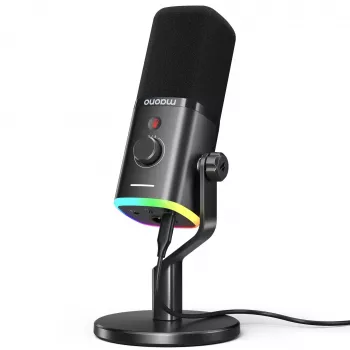
For a deeper, product-focused breakdown—USB-C vs. XLR, dynamic vs. condenser, and practical noise-reduction tips—see the full guide here: https://enticinghitsbay.shop/guide-usb-c-xlr-dynamic-rgb-gaming-mic-noise-reduction/.
FAQ
Is an XLR dynamic mic better than a USB mic for streaming?
XLR dynamic mics can sound more consistent when paired with a good interface, especially in noisy spaces, but USB dynamics are often simpler and can still deliver excellent results. The better choice depends on whether you want a plug-and-play setup or the flexibility to upgrade preamps and processing later.













Leave a comment