Airless Spray Gun, Hose & Extension Rod Kit Guide
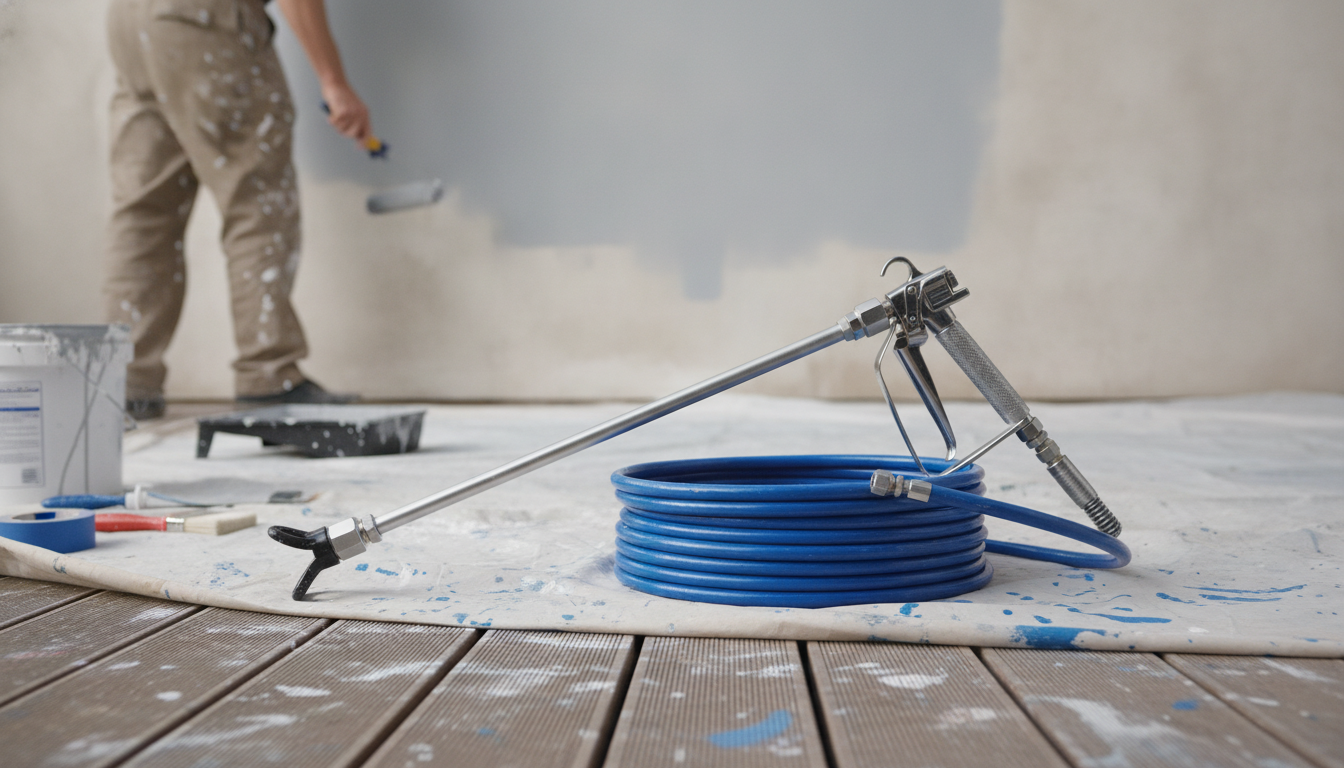
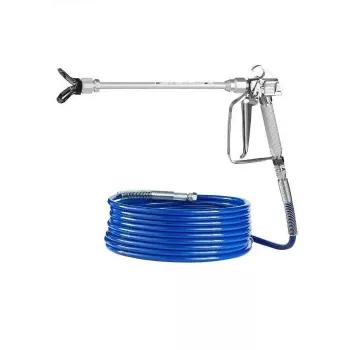
High Pressure Airless Paint Spray Gun & Hose Kit with Extension Rod
A high-pressure airless spray setup can speed up painting on walls, fences, ceilings, and trim while keeping coverage even. This kit combines a spray gun, hose, and extension rod to help reach high or awkward areas with less ladder work and fewer stops to reposition. When everything is properly matched to your sprayer and coating, you can maintain a steady fan pattern and a consistent finish across large areas.
What This Kit Helps With
- Faster application on large surfaces compared with brushing or rolling
- More consistent finish when the spray pattern and distance are kept steady
- Improved reach for ceilings, soffits, eaves, and tall walls using the extension rod
- Reduced fatigue from repeated bending, reaching, and ladder repositioning
Airless spraying is especially useful when you want uniform coverage over textured walls, long runs of fencing, or wide ceilings where roller marks and lap lines can be more noticeable.
What’s Typically Included in a Gun + Hose + Extension Setup
- Spray gun body with trigger and filter housing (design varies by model)
- High-pressure hose for connecting the gun to an airless sprayer/pump
- Extension rod to increase reach while maintaining a stable spray distance
- Fittings/adapters (may vary), plus basic seals that ensure leak-free connections
- Before starting, confirm the thread type and connector size match the sprayer in use
Quick Component Check Before First Use
| Component | What to confirm | Why it matters |
|---|---|---|
| Spray gun | Trigger moves smoothly; filter housing is snug | Helps prevent sputtering and uneven flow |
| Hose | No kinks, cracks, or flattened spots; connectors tighten fully | Reduces blowout risk and pressure loss |
| Extension rod | Seats firmly; no wobble at joints | Maintains a steady spray pattern at distance |
| Seals/fittings | No visible nicks; seated correctly | Prevents leaks and paint mist at connections |
Compatibility Notes (Before Hooking Up)
- Confirm the kit is intended for high-pressure airless sprayers (not HVLP turbine systems).
- Match connector threads and sizes between sprayer outlet, hose ends, and gun inlet.
- Use a spray tip and guard rated for the pressure and coating type being applied.
- If adapting between brands, use properly rated adapters—avoid “close enough” fittings that can leak under pressure.
A good match is about more than “it screws on.” High pressure magnifies small fit issues, and a minor seep at a connection can quickly turn into a messy spray cloud or an unstable fan pattern.
Setup Steps for Cleaner, More Predictable Results
- Relieve pressure at the sprayer before connecting or disconnecting any hose or gun components.
- Attach hose to sprayer, then connect the spray gun; tighten firmly but avoid over-torquing fittings.
- Flush the system with the correct solvent (water or mineral spirits depending on coating) before painting.
- Prime the sprayer, then test the spray pattern on cardboard and adjust tip size/pressure as needed.
- With the extension rod, keep a consistent distance and overlap passes to avoid striping.
For smoother coverage, keep the gun moving before pulling the trigger and release the trigger just before you stop moving. This minimizes heavy edges at the start and end of each pass.
Best Uses for the Extension Rod
- Ceilings: maintain a perpendicular spray angle to reduce overspray and uneven sheen.
- High walls and stairwells: reduce ladder moves by working in vertical sections.
- Eaves and soffits: aim slightly outward to keep mist off siding where possible.
- Deck rails and fencing: use smooth, continuous passes and keep the rod steady to avoid heavy edges.
When working overhead, a steady stance matters. If you feel your shoulders tightening up, take short breaks—fatigue often shows up as inconsistent distance, which can cause patchy sheen and uneven coverage.
Safety Practices for High-Pressure Spraying
- Treat airless pressure as a serious hazard—never point the gun at skin; injection injuries can be life-threatening.
- Use appropriate PPE: eye protection, gloves, and a respirator suited to the coating and environment.
- Keep the tip guard installed; engage the trigger lock when not spraying.
- Ventilate the area and control ignition sources when using flammable coatings/solvents.
- Protect nearby surfaces with masking and drop cloths; manage overspray with controlled pressure and correct tip choice.
For general safety guidance, review OSHA’s spray finishing resources at https://www.osha.gov/spray-finishing. If you’re working on older homes where lead paint may be present, the EPA’s lead safety information is a solid starting point: https://www.epa.gov/lead. For respirator selection and proper use, consult NIOSH guidance: https://www.cdc.gov/niosh/topics/respirators/.
Cleaning and Maintenance to Prevent Clogs and Leaks
Common Issues and Quick Fixes
Product Options
- High Pressure Airless Paint Spray Gun & Hose Kit with Extension Rod ($54.51): a bundled option for extending reach and simplifying setup when paired with a compatible airless sprayer.
- Luxury Men’s Automatic Watch with Sapphire Glass & Stainless Steel Strap ($165.01): a premium accessory option if you’re shopping beyond tools.
- Marble Travertine Taper Candle Holder for Home Decor and Elegant Events ($145.01): a décor piece that complements freshly painted rooms and styled shelves.
FAQ
Will this work with any airless paint sprayer?
Compatibility depends on matching the hose and gun connection size/thread type to your sprayer, plus confirming the pressure rating and using the correct tip/guard. Check your sprayer’s outlet fitting and manual before purchase and before connecting.
Do extension rods reduce spray quality?
A properly fitted extension can maintain a consistent spray pattern when pressure and tip size are correct. Most quality issues come from loose fittings, too-low pressure, clogged filters, or inconsistent distance/angle while spraying.
How do you prevent clogs when spraying thicker coatings?
Filter the paint, use a tip sized for thicker material, and only thin coatings if the manufacturer allows it. Keep the gun filter clean, maintain adequate pressure for a stable fan, and flush the system promptly after use.














Leave a comment